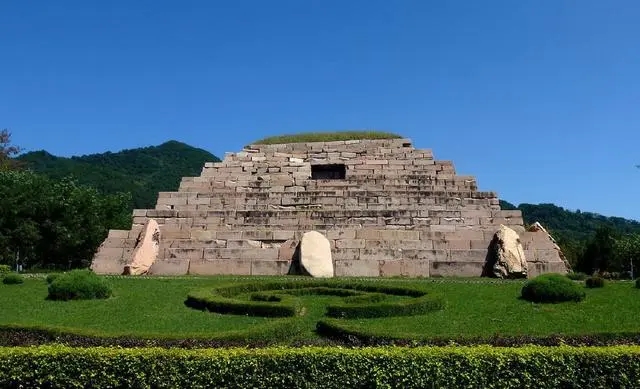
Capital Cities and Tombs of the Ancient Koguryo Kingdom
Introduction
Primarily situated in Jilin and Liaoning provinces in Northeast China, this site comprises archaeological remnants of three fortress-cities and 40 identified tombs belonging to Koguryo imperial and noble families. These include Wunu Mountain City, Guonei City, and Wandu Mountain City, with 14 imperial tombs and 26 noble tombs. It was inscribed on the World Cultural Heritage List in 2004.
Historical Context
Established in 37 BC, the Koguryo Kingdom emerged as a prominent regional power in Northeast Asia, extending from the Korean Peninsula into parts of modern-day China. Known for its military prowess, cultural achievements, and distinctive architectural designs, the kingdom's capitals - Wunu Mountain City, Guonei City, and Wandu Mountain City - served as political and economic centers during different phases of its history.
Throughout its existence, the Koguryo Kingdom faced challenges from neighboring states and internal conflicts. Despite the destruction of Guonei City in 197 due to conflict, it was later reconstructed. Wandu Mountain City, initially built in 209, showcased the kingdom's architectural ingenuity by integrating natural landscapes into its urban design. The kingdom's influence waned after AD 668 following conflicts with the Silla and Tang dynasties.
Cultural Significance
The Koguryo Kingdom significantly influenced the history and culture of Northeast Asia, as evidenced by its capital cities and tombs. The tombs, especially the 14 imperial stepped pyramids, demonstrate the kingdom's architectural innovation. Adorned with stone and clay-tiled roofs, these structures blend indigenous styles with external influences, notably from Chinese culture.
The vivid wall paintings within the tombs depict daily life, nature, and mythology, showcasing artistic excellence and technical skill. These paintings, celebrated as the "art treasure of northeastern Asia," offer insights into Koguryo's cultural exchanges. Inscriptions and steles, such as the Gwanggaeto Stele, provide valuable historical information about the kingdom's interactions with neighboring regions.
Archaeological Discoveries
Excavations at the ancient Koguryo sites have unveiled insights into the kingdom's history, culture, and societal structure. Discoveries reveal sophisticated urban planning and architectural achievements, including palaces, fortifications, and residential areas, reflecting a complex society with a well-organized administrative system.
The tombs, particularly those of imperial and noble families, feature murals depicting various themes that shed light on Koguryo's cultural and spiritual beliefs.
Preservation Efforts
Preservation of the Capital Cities and Tombs of the Ancient Koguryo Kingdom is crucial for historians, archaeologists, and cultural heritage organizations. Designated as a World Heritage site in 2004, efforts focus on safeguarding these remnants of the past. The Ji'an Koguryo National Archaeological Site Park plays a central role in preservation activities, ensuring accessibility for researchers and the public.
Initiatives aim to maintain the structural integrity of the ancient cities and tombs, prevent degradation of tomb paintings, and manage visitor access. Through international collaboration and local engagement, preservation efforts seek to ensure the enduring legacy of the Koguryo Kingdom for future generations.








